


The 16 Hopefuls: Inside Fisher-Price’s First 16 Toys and the Birth of a Classic Brand
📝 The 16 Hopefuls: Inside Fisher-Price’s First 16 Toys and the Birth of a Classic Brand
Meta Title: The 16 Hopefuls: Fisher-Price’s First 16 Toys and the Birth of a Classic Brand
Meta Description: Discover Fisher-Price’s very first 16 toys—“The 16 Hopefuls”—how they were made, why they mattered in the 1930s, and why vintage Fisher-Price wooden pull toys still captivate parents, collectors, and kids today.
Word Count: 2,160 words | Tags: Fisher-Price, vintage toys, classic toys, wooden pull toys, toy history, Fisher-Price collectors, nostalgia, screen-free play, parenting, Classic Toy Toys
Featured Image:
The 16 Hopefuls: Inside Fisher-Price’s First 16 Toys and the Birth of a Classic Brand
Meta title: The 16 Hopefuls: Fisher-Price’s First 16 Toys and the Birth of a Classic Brand
Meta description: Discover Fisher-Price’s very first 16 toys—"The 16 Hopefuls"—how they were made, why they mattered in the 1930s, and why vintage Fisher-Price wooden pull toys still captivate parents, collectors, and kids today.
If you close your eyes and picture a classic Fisher-Price toy, chances are you see something simple and sturdy: a friendly animal on wooden wheels, clattering along behind a delighted toddler.
Long before plastic playsets and electronic learning toys, Fisher-Price launched its entire business on a tiny lineup of just sixteen wooden toys. Inside the company, they nicknamed them “The 16 Hopefuls”—because the brand’s future depended on whether these first creations would win children’s hearts.
Today, those early pieces are the stuff of legend for Fisher-Price collectors, vintage toy lovers, and nostalgic parents. They also say a lot about why classic, screen-free toys still feel so special.
In this guide, we’ll walk through the story behind Fisher-Price’s first 16 toys, what made them different in the early 1930s, and how that legacy lives on today—right down to the replacement parts and retro-inspired toys you can still bring into your home.
How Fisher-Price began: a toy company built on imagination and durability
Fisher-Price was founded in 1930 in East Aurora, New York by four partners:
- Herman Fisher – a toy sales executive who believed toys should “have intrinsic play value.”
- Irving Price – a successful businessman (and former mayor of East Aurora).
- Margaret Evans Price – Irving’s wife, a respected children’s book illustrator and designer.
- Helen Schelle – owner of a toy shop, who understood what parents and kids actually bought.
They formed Fisher-Price at the very start of the Great Depression—hardly an obvious time to start a toy company. But their bet was simple and bold: high-quality, durable, imaginative toys would stand out even in tough economic times.
In 1931, they took their very first line of toys to the American International Toy Fair in New York City. That line consisted of 16 wooden toys, showcased in a brochure they cheekily titled “Sixteen Hopefuls.” The name captured the mood perfectly: hopeful, a bit nervous, but full of belief that these toys could start something big.
From the beginning, Fisher-Price focused on four guiding principles:
- Intrinsic play value – Toys should be fun on their own, not just because of a fad or license.
- Durability – Built to be dropped, dragged, and loved hard.
- Action – Movement, sound, and cause-and-effect baked into the design.
- Imagination and humor – Quirky characters, funny names, and childlike charm.
Those exact ideas are written into the story of The 16 Hopefuls.
Meet “The 16 Hopefuls”: Fisher-Price’s first 16 toys
Different sources sometimes quibble over details, but toy historians and collector guides generally agree on this lineup for the original 1931 Fisher-Price toys known as The 16 Hopefuls:
- Barky Puppy
- Bunny Scoot
- Dizzy Dino
- Doctor Doodle (Dr. Doodle)
- Drummer Bear
- Go ’n Back Bruno
- Go ’n Back Jumbo
- Go ’n Back Mule
- Granny Doodle
- Lofty Lizzy
- Lookee Monk
- Stoopy Storky
- Tailspin Tabby
- Woodsy-Wee Circus
- Woodsy-Wee Pets
- Woodsy-Wee Zoo
Every toy in this list was made primarily from wood, with lithographed paper graphics and simple metal axles or hardware. Most were pull toys or toys with built-in motion—nothing sat still if a child could help it.
Let’s look a little closer at some of the standouts and the themes that tied the whole set together.
What these first Fisher-Price toys looked and felt like
Wooden bodies, lithographed detail, and bright primary colors
In the early 1930s, plastic was not yet a staple of toy manufacturing. Fisher-Price leaned into what they knew best:
- Solid wood bodies – strong enough to withstand rough play and multiple children.
- Lithographed paper carefully glued onto the wood, providing colorful illustrations and character details.
- Metal wheels or wooden wheels with rubber treads, attached to sturdy axles.
The result? Toys that felt substantial in a child’s hand—with weight, texture, and satisfying movement. Many modern collectors of vintage Fisher-Price toys still rave about how these early pieces feel compared to lighter, hollow plastic toys.
Whimsical characters with a sense of humor
Margaret Evans Price’s background as an illustrator shines through in these toys. Even just from their names, you can hear the playful, almost storybook tone:
- Doctor Doodle & Granny Doodle – a duck doctor and a duck granny, both full of personality.
- Stoopy Storky – a stork with a goofy posture, often depicted bending and bobbing as it rolls.
- Tailspin Tabby – a cat whose design often emphasized swirling, spinning motion.
- Lookee Monk – a monkey whose eyes or head might move as the toy rolls.
These were more than anonymous animals—they were characters, each with its own implied story, which invited children to narrate and imagine.
Designed to move: the magic of early wooden pull toys
What made Fisher-Price stand out against other 1930s toys was how alive these pieces felt when you pulled or pushed them. The 16 Hopefuls line leaned heavily into action:
- Barky Puppy likely featured a wagging tail or bobbing body as it rolled.
- Dizzy Dino may have swiveled or rocked in an amusing way, emphasizing a “dizzy” action.
- The Go ’n Back series (Bruno, Jumbo, Mule) typically used clever engineering so the toy would
- roll forward and then
- partially roll back or wobble,
creating a delightful, slightly unpredictable pattern.
These toys acted as early STEM experiences before anyone used that word: kids learned about cause and effect, motion, and rhythm simply by tugging a string.
Small sets, big stories: the Woodsy-Wee line
Three of the sixteen toys—Woodsy-Wee Circus, Woodsy-Wee Pets, and Woodsy-Wee Zoo—were more like small play sets than single characters.
They typically included:
- Multiple small wooden figures (circus animals, pets, or zoo creatures).
- Simple backgrounds or wagons to pull.
- Grouped characters that encouraged storytelling and role-play.
For children in the 1930s, these sets offered whole worlds in miniature—and for today’s collectors, they’re some of the most charming and sought-after examples of early Fisher-Price design.
Why the 16 Hopefuls were so revolutionary in the early 1930s
To really appreciate The 16 Hopefuls, it helps to remember the world of toys in the early 1930s.
A toy line born in the Great Depression
The Great Depression was well underway. Many families had little money for extras, and toys had to justify their price with quality and lasting appeal.
Fisher-Price set themselves apart by promising that their toys would:
- Last – so they could be handed down or shared among siblings.
- Engage kids again and again – with movement, sound, and humor.
- Offer value – not just in materials, but in how many ways children could play with them.
That combination—durable materials + real play value—wasn’t a given back then. It became the backbone of the history of Fisher-Price and a major reason the company survived and grew.
A fresh standard for classic toys
Before Fisher-Price, many toys were either simple but dull or delicate novelties meant to be admired rather than played with hard.
The 16 Hopefuls helped shift expectations by showing that toys could be:
- Beautifully illustrated yet tough enough for floor play.
- Mechanically clever yet intuitive for toddlers.
- Funny and character-driven without being tied to a movie or cartoon.
In other words, they helped define what we now think of as classic toys: open-ended, sensory, and built for imaginative play.
A closer look at a few iconic Hopefuls
While every toy in the group has its fans, a few stand out as especially emblematic of vintage Fisher-Price toys.
Doctor Doodle (Dr. Doodle)
Often cited in company histories and collector guides, Doctor Doodle is a wooden duck pull toy dressed as a friendly doctor. As children pull the toy along, Dr. Doodle’s body wobbles and his beak may open and close.
Why it matters:
- It captures Fisher-Price’s early sense of humor and character design.
- It showcases the brand’s action focus—always something moving, wobbling, or clicking.
- Fisher-Price later issued a commemorative reissue decades later, acknowledging its place in the company’s story.
The Go ’n Back toys (Bruno, Jumbo, Mule)
The Go ’n Back line demonstrates Fisher-Price’s fascination with mechanical surprises. These toys typically moved forward and then partially reversed or wobbled back, using a simple but clever mechanism.
Why they matter:
- They taught kids about motion and anticipation—would it go straight, or wobble back?
- They highlighted Fisher-Price’s knack for squeezing mechanical ingenuity out of humble materials like wood and metal.
The Woodsy-Wee sets
The Woodsy-Wee Circus, Woodsy-Wee Pets, and Woodsy-Wee Zoo gave children a cast of characters instead of a single figure.
Why they matter:
- They encouraged imaginative, narrative play rather than one repetitive action.
- They are early examples of themed sets, a concept Fisher-Price would later expand on with farms, towns, and eventually Little People.
How the 16 Hopefuls shaped the Fisher-Price brand we know today
Looking back, it’s clear that the DNA of classic Fisher-Price was present right from these first 16 toys.
Design values that never went away
Modern Fisher-Price lines—especially Little People, classic reissues, and wooden pull toys—still echo the values established in 1931:
- Friendly faces and rounded shapes to make toys feel approachable.
- Bright, high-contrast colors to draw young children’s attention.
- Simple, robust mechanics (clicking, popping, wobbling) that reward exploration.
- Characters over complexity—letting the child’s imagination do most of the work.
Many parents and collectors looking at early Hopefuls see familiar gestures and silhouettes that later appeared in:
- 1950s and 1960s wooden pull toys, like Snoopy Sniffer.
- 1960s–1980s Little People playsets, with farms, towns, and zoos echoing the Woodsy-Wee worldbuilding.
- 1990s and 2000s heritage reissues that deliberately nodded to those early designs.
From wooden pull toys to a global icon
After the success of the 16 Hopefuls, Fisher-Price expanded rapidly:
- More pull toys and rolling characters in the 1930s and 1940s.
- Licensed characters (like Disney’s Pluto) in the Pop-Up Kritter line.
- The introduction of plastic components after World War II, which allowed new shapes and colors while still emphasizing durability.
- The evolution of Little People starting in the late 1950s–1960s, bringing the Fisher-Price philosophy into whole miniature worlds.
Even as materials and technologies changed, the core promise stayed the same: make toys that children would truly play with, not just look at.
Why these early toys still captivate collectors and parents today
You don’t have to be a long-time Fisher-Price collector to feel something when you see a well-loved Doctor Doodle or Barky Puppy.
Nostalgia that’s meant to be shared
For many adults, vintage Fisher-Price toys are wrapped up with powerful memories:
- The sound of wooden wheels clattering on a kitchen floor.
- The feel of a pull string in a small hand.
- The sight of friendly animal faces lined up on a bedroom shelf.
That nostalgia isn’t just about personal memory—it’s about trust. These toys stood the test of time, both physically and emotionally, which is exactly why so many parents and grandparents want to share classic toys with the kids in their lives today.
Screen-free, open-ended play in a digital age
In a world of tablets, streaming shows, and electronic toys, the appeal of simple wooden pull toys is actually stronger than ever.
Toys like the 16 Hopefuls:
- Invite movement—kids have to push, pull, carry, and arrange them.
- Encourage imaginative storytelling instead of scripted audio cues.
- Support fine and gross motor skills naturally through play.
- Offer a calming, unplugged experience for both children and adults.
It’s no accident that modern parents search for terms like “wooden pull toys,” “vintage Fisher-Price toys,” and “classic Fisher-Price” when they’re trying to balance tech with tactile play.
The collector community and the joy of restoration
Because these toys were built so solidly, many examples of the 16 Hopefuls—and the wooden pull toys that followed them—still exist today. But decades of love mean they often need a little help:
- Wheels crack or go missing.
- Lithographed graphics peel or fade.
- Pull strings break or are replaced with something not quite right.
That’s where a vibrant community of Fisher-Price collectors and restorers comes in, carefully cleaning, repairing, and reassembling these toys so they can be enjoyed again—either on display shelves or gently in play.
For some, hunting down the 16 Hopefuls becomes a long-term collecting goal, a way to connect with the very beginning of the brand. For others, tracking down replacement parts or well-made reproductions is about something simpler and deeply meaningful:
“I just want my kids to play with the same kind of toys I loved.”
Keeping the legacy alive: classic toys and thoughtful replacements
At Classic Toy Toys, that’s exactly the spirit behind the shop: helping families and collectors keep Fisher-Price’s classic legacy alive.
Whether you’re:
- Restoring a beloved family wooden pull toy,
- Completing a vintage Fisher-Price playset, or
- Curating a cozy, screen-free toy shelf for your child or grandchild,
having access to the right parts and pieces makes all the difference.
Classic Toy Toys focuses on:
- Authentic-style and compatible replacement parts for classic Fisher-Price toys, including wheels, axles, and other essentials.
- Precision 3D-printed pieces that fit and function the way you expect—so a favorite toy can roll, clack, or wobble again.
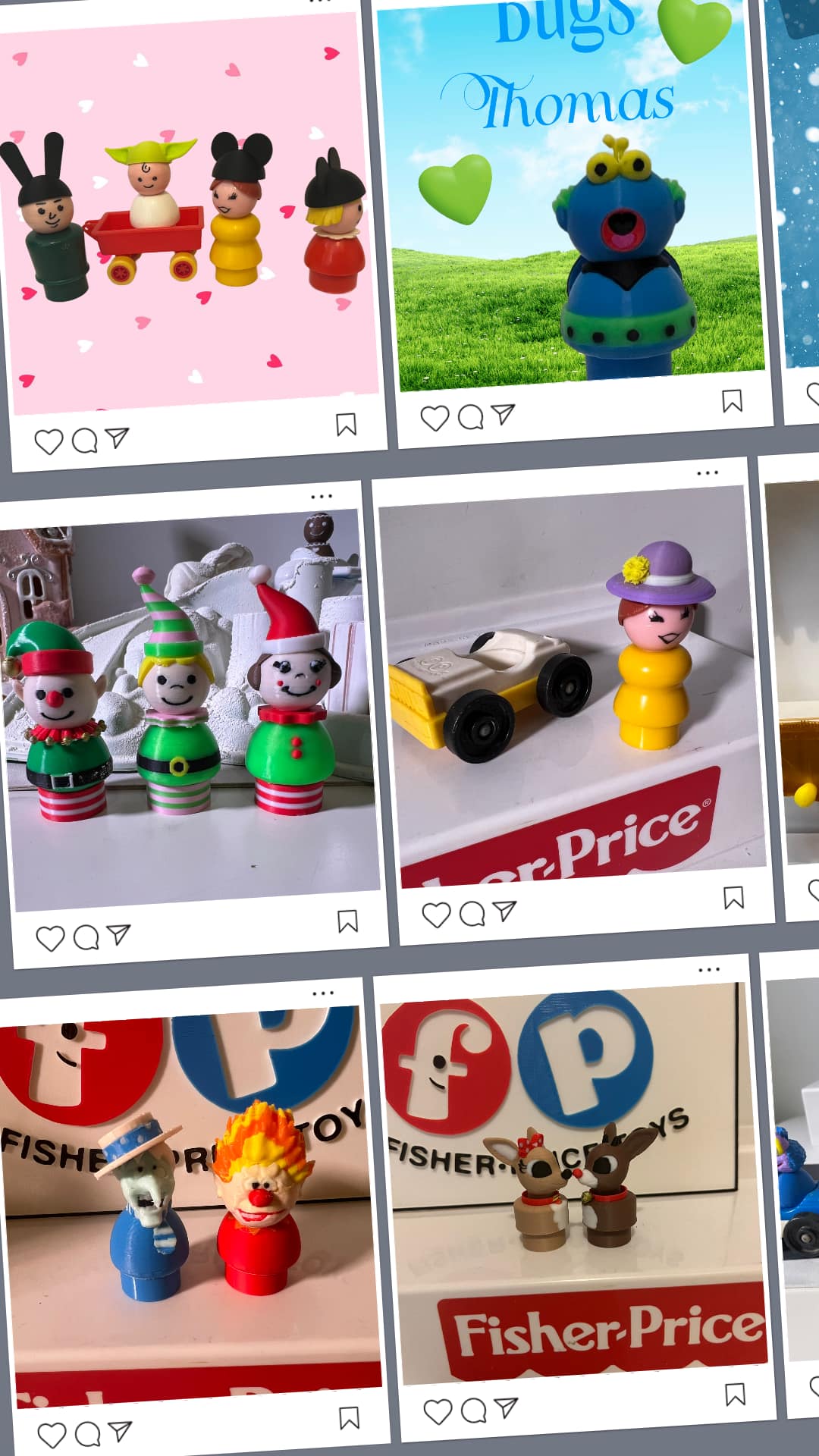
- Custom Little People–style figures and vintage-inspired touches that celebrate the look and feel of mid-century Fisher-Price design.
It’s a modern way to honor the same principles that drove The 16 Hopefuls in 1931:
- Toys should be loved, not just looked at.
- Quality and charm are worth preserving.
- Simple, classic play never goes out of style.
If those early wooden pull toys make your heart ache a little—in the best way—you’re in good company.
How to bring a bit of the 16 Hopefuls spirit into your home today
You don’t need to own an original 1931 toy to enjoy what made the 16 Hopefuls special. Here are a few simple ways to carry that spirit forward:
1. Make room for wooden pull toys and rolling friends
Choose one or two wooden or classic-style pull toys for your child’s play space:
- Look for friendly faces, bright but not overwhelming colors, and sturdy construction.
- Display them where your child can easily grab and pull them around.
- Rotate them periodically so they feel fresh and inviting.
2. Blend old and new
If you have vintage Fisher-Price pieces—maybe a hand-me-down from your own childhood—consider pairing them with thoughtfully made replacement parts so they’re safe and functional again.
A wobbly wheel or missing figure doesn’t have to sideline a toy forever. With the right parts, you can:
- Restore a classic for gentle, supervised play.
- Create a charming display on a shelf or in a nursery.
- Start a family tradition, telling your child the story behind the toy.
3. Tell the story
Kids love stories. Share the tale of how Fisher-Price’s first 16 toys came to be:
- That they were made of wood, not plastic.
- That they had silly names like Barky Puppy and Tailspin Tabby.
- That the people who made them were hoping kids would love them—hence, the “16 Hopefuls.”
Turning toys into a story helps children see them as companions, not just objects, and deepens their appreciation for classic playthings.
4. Curate a small “classic corner”
Even in a modern home filled with tech, you can carve out a space that feels like a little tribute to vintage Fisher-Price:
- A low shelf with wooden pull toys, a few Little People–style figures, and a sturdy block set.
- A basket with cars, trains, and rolling animals—no batteries, just imagination.
- A special spot where a restored or well-loved vintage piece can sit between play sessions.
It doesn’t have to be big to feel meaningful.
The lasting charm of The 16 Hopefuls
When Fisher-Price introduced The 16 Hopefuls in 1931, they couldn’t have known they were launching a brand that would define childhood for generations.
And yet, looking back, it all makes sense:
- Sturdy wooden bodies and thoughtful mechanics gave kids something real to hold, pull, and explore.
- Whimsical characters and lighthearted names invited laughter and storytelling.
- A commitment to durability and true play value built the trust that keeps parents coming back nearly a century later.
For parents, vintage toy lovers, and Fisher-Price collectors, these first 16 toys are more than historical footnotes. They’re a reminder that the best toys don’t depend on screens, sound chips, or endless accessories. They rely on something simpler and more powerful:
A child’s curiosity and imagination.
If you’re ready to keep that tradition going—whether by restoring a vintage piece, tracking down a favorite classic Fisher-Price toy, or simply choosing more screen-free play for your kids—shops like Classic Toy Toys are here to help keep those hopeful little wheels turning.
If you’d like, you can explore Classic Toy Toys at Classictoytoys.com for vintage-inspired pieces, Fisher-Price-compatible replacement parts, and custom figures that celebrate the timeless charm of toys like The 16 Hopefuls.